
Skip to content

Drone surveillance service

Loihde’s drone surveillance service quickly brings automated outdoor surveillance to where it is needed. The service covers everything from planning to operation, maintenance and alert response.

security_m

Why does outdoor surveillance require a new kind of response?

Traditionally, outdoor surveillance has relied on security guards and fixed cameras. Both still have their place, but they are solutions designed for a static world. Fixed video surveillance does not cover everything. Challenging terrain, low-light conditions or technical failures can leave large areas unmonitored. It takes time for a security guard to arrive at the location. This means that, in a large area or a difficult-to-access site, the situation has often had time to escalate before visual contact is established. Under the traditional model, if there is a need to increase the level of security, every step comes at a higher cost.

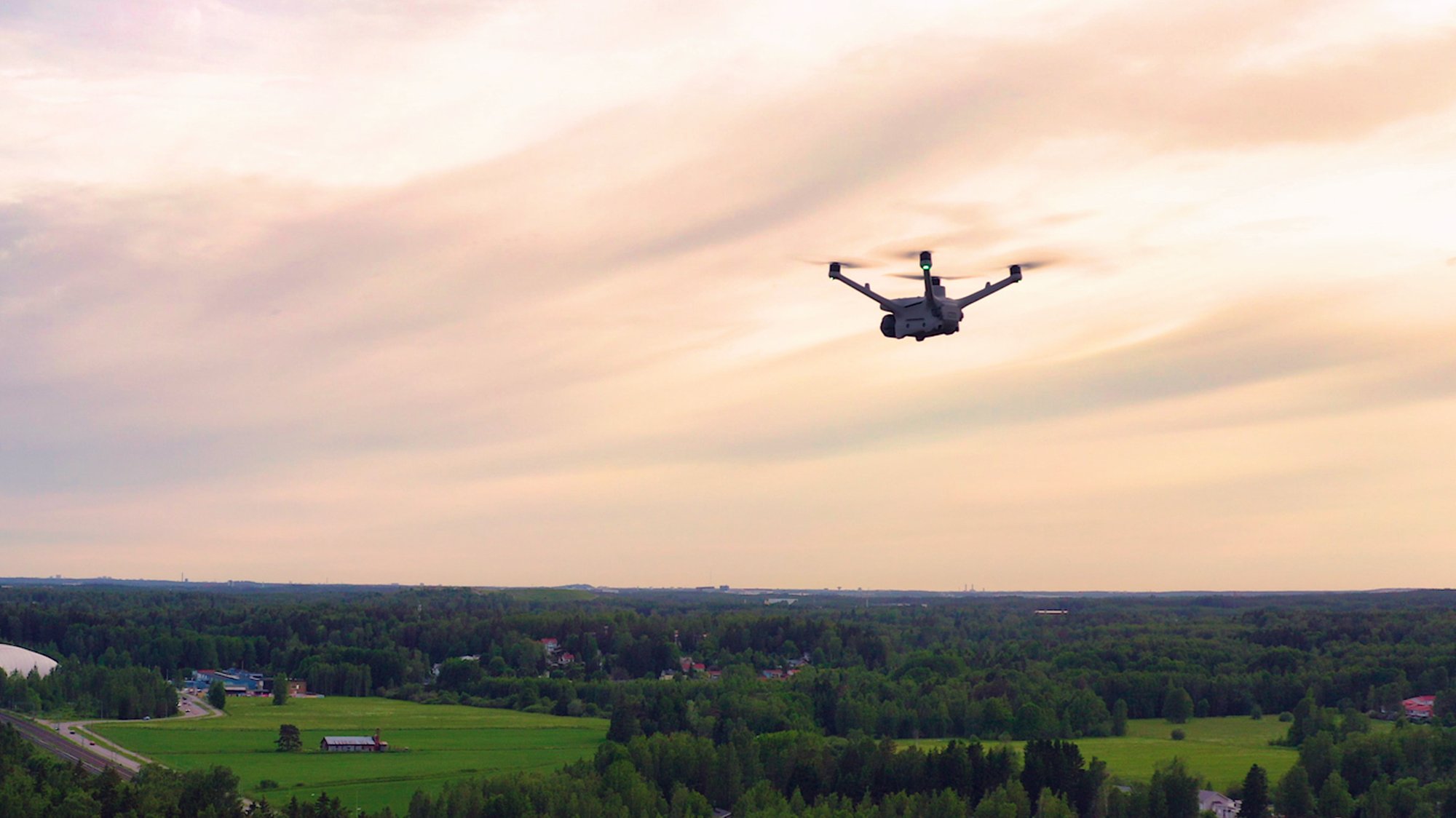
Over the past few years, drone technology has reached a point where a remotely operated drone equipped with thermal imaging cameras can cover a large outdoor area faster and more comprehensively than what was previously possible. This is no longer an experiment; it is something you can purchase as a service.

The CER Directive (2025) requires that critical infrastructure operators assess the resilience of their physical security. Outdoor surveillance and a quick alert response are becoming part of the mandatory agenda.

select_03.png_purple

What does the customer get, and how do their day-to-day operations change?

The drone surveillance service eliminates three recognised problems in outdoor surveillance. 

1) Blind spots disappear
The drone covers an area within a five-kilometre radius, even in low-light conditions and challenging terrain. The thermal camera detects what the eye or a fixed camera cannot see.

2) The response time is shortened
The remote pilot confirms the alert and launches the drone. There is no need to wait for the security guard, and visual contact is established quickly.

3) Costs do not scale linearly  
One drone covers an area that previously required several guards or dozens of additional cameras. Increasing the level of security no longer automatically leads to higher costs.

Drooni, luvut


Use cases: how the service works in different situations

Loihde_Drone2

The drone surveillance service suits use cases where fixed surveillance alone is not enough, or where a quick alert response is critical

  • An industrial company whose site includes challenging terrain or multiple buildings: the drone covers the entire area under a single service, with routine rounds carried out according to a set schedule.
  • An energy plant facing an increasing physical threat: in the event of an alert, the remote pilot checks the incident and, if necessary, alerts a security guard.
  • A harbour or logistics centre where the site is large and difficult to monitor in low-light conditions: the thermal camera detects people and vehicles even at night.
  • A critical infrastructure operator subject to the requirements set out in the CER Directive: documented routine rounds and recorded video support auditing.
  • An organisation that wishes to elevate its level of security without increasing the number of personnel: the drone performs routine rounds, while security guards are used for special circumstances.

What does the drone surveillance service include?

The drone surveillance service is a comprehensive service. Instead of purchasing equipment, the customer purchases a fully operational surveillance capability.

  • Flight areas and routes are planned on site-specific basis
  • Delivery, deployment and technical integration of drones
  • The agreed-upon routine rounds as scheduled, including documentation and reporting
  • Alert response: the remote pilot confirms the alert and launches the drone
  • Loihde’s pilots operate the drone remotely
  • Equipment maintenance and updates
  • Recording of video material according to the agreed-upon parameters

VMS compatibility: the drone can be integrated with existing video surveillance. The technical integration is planned on a site-specific basis, taking the characteristics of different VMS platforms into consideration.

Step-by-step deployment of the drone surveillance service  

  1. Survey: assess the site, needs and current surveillance model. Specify the flight areas, routes and alert response parameters.

  2. Planning: Loihde plans the service according to the site. No technical expertise is required from the customer.

  3. Deployment: the drone is delivered, the integration is carried out and the system is tested before production use.

  4. The service starts: routine rounds commence according to the agreed-upon schedule and the alert response is active.

  5. Continuous service: Loihde is responsible for maintenance, updates and pilots. The customer has access to reports.


search_01
loved_02

Why purchase a drone surveillance service from Loihde?

Loihde is Finland’s largest total security integrator: over 10,000 surveillance cameras as a comprehensive service, 400+ security system projects annually, NPS 49 in security solutions. The drone surveillance service is built on this experience.

The comprehensive service sets Loihde apart from individual drone suppliers. With our solution, the customer does not purchase hardware that its own personnel are then responsible for operating. Loihde is responsible for planning, operation, pilots and maintenance.

The service is part of Loihde’s One Security® package. This means that drone surveillance is not a standalone service; instead, it is delivered through the same partner as the customer's other physical security and cyber security. One responsible party, one situational picture.


Frequently asked questions about the drone surveillance service

What does the drone surveillance service include?

The service is a comprehensive service that includes planning, drone delivery, routine rounds, alert response, pilots, maintenance and video recording. The customer purchases security rather than hardware.

How does the alert response work?

Loihde's remote pilot confirms the alert and launches the drone. The pilot monitors the situation in real time using a thermal camera and a normal camera and, if necessary, relays information to the emergency response centre or the customer’s security organisation.

Does the drone work in low-light and winter conditions?

Yes. The drone is equipped with a thermal camera that detects people and vehicles even in complete darkness. Restrictions related to winter operations are reviewed in the site-specific planning phase.

Can the drone be integrated into an existing camera surveillance system?

The video captured by the drone can be integrated into an existing VMS system. The technical integration is planned on a site-specific basis, taking the characteristics of different VMS platforms into consideration. This will be reviewed in connection with the demonstration or quotation process.

.

What is the relevance of the CER Directive?

The CER Directive (2025) requires that critical infrastructure operators assess and improve their physical resilience. Documented routine rounds, rapid alert response and recorded video support audits and compliance reporting.

Get in touch with us

The easiest way to learn more about the service is a live demonstration. Automated flight can be presented at Loihde's demonstration site. At the customer's site, we can provide a manual flight demonstration to show routes and picture quality. Get in touch with us to set up a demonstration.